
The veteran-founded US coffee company is close to breaking as distribution growth and a leaner operating model begin to deliver, but the future of its cafés looks uncertain
Black Rifle Coffee reported second-quarter revenue of $107m, up 12.8% year-on-year, driven by strong performance in its wholesale and direct-to-consumer channels. Its net loss narrowed to $0.2m from $14.5m in the same period last year, while adjusted EBITDA increased to $6.3m from $2.4m.
Wholesale revenue rose 15.2% to $70.6m, with growth led by wider distribution of packaged coffee across food and mass retail. The channel now accounts for approximately two-thirds of group revenue. Packaged coffee distribution increased 2.6 percentage points to 56.5% of all commodity volume, a measure of the proportion of retail stores carrying the company’s products.
Direct-to-consumer revenue increased 13.6% to $31.4m, its strongest year-on-year quarterly growth in more than four years. The increase was driven primarily by third-party digital marketplaces, partly offset by lower subscription revenue.
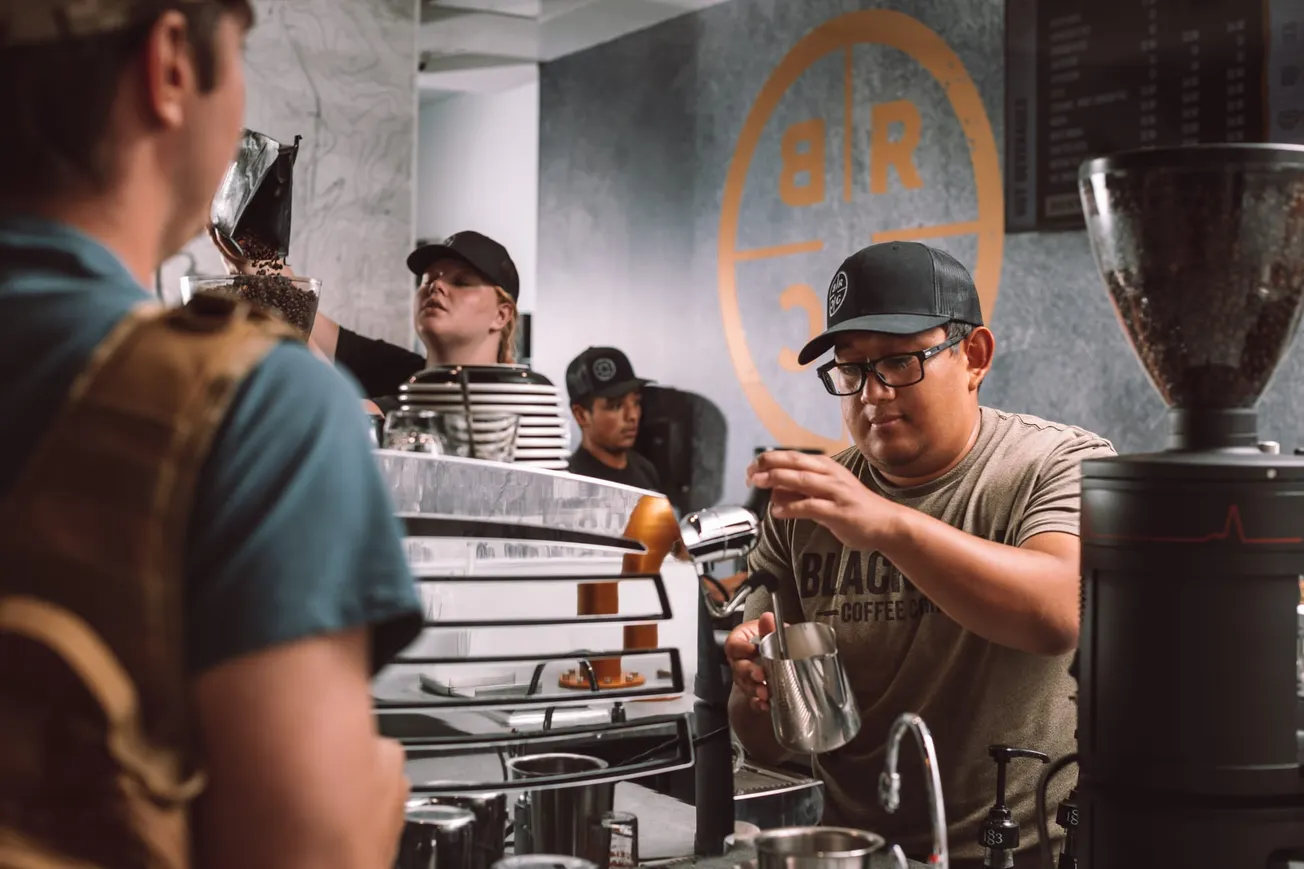
The company’s 37 coffee shops continued to underperform. Revenue from the company-operated shops fell 15% to $5m, with lower transaction volumes and average order values both contributing to the decline.
“Our second quarter performance reflects continued execution against the priorities we established for 2026 and the strength of our core coffee business,” said CEO Chris Mondzelewski. He said expanded distribution and shelf presence were supporting wholesale growth, while the company’s marketing around America’s 250th anniversary was helping it reach new consumers.
The results represent a significant improvement for a business that has spent several years restructuring after four consecutive annual net losses through 2024. Black Rifle has reduced its workforce by nearly half since the end of 2022, from 920 employees to 468, while shifting resources towards marketing, packaged coffee and retail distribution.
CFO Matt Amigh said gross margin had stabilised during the first half of 2026, including modest expansion to 34.1% in the second quarter. He expects further improvement in the second half as lower green coffee costs flow into the company’s cost base, supported by changes to its product mix and productivity initiatives.
“The business delivered strong second quarter revenue and Adjusted EBITDA growth while continuing to improve cash conversion,” Amigh said. “We remain highly focused on driving structural improvements across the operating model to support earnings growth and improve working capital efficiency.”
Black Rifle maintained its full-year outlook for at least 8% revenue growth and at least 35% adjusted EBITDA growth. The company’s challenge is now to turn its wholesale momentum into sustained profitability while deciding what role its café estate should play in a business increasingly built around packaged coffee, digital marketplaces and retail distribution.