
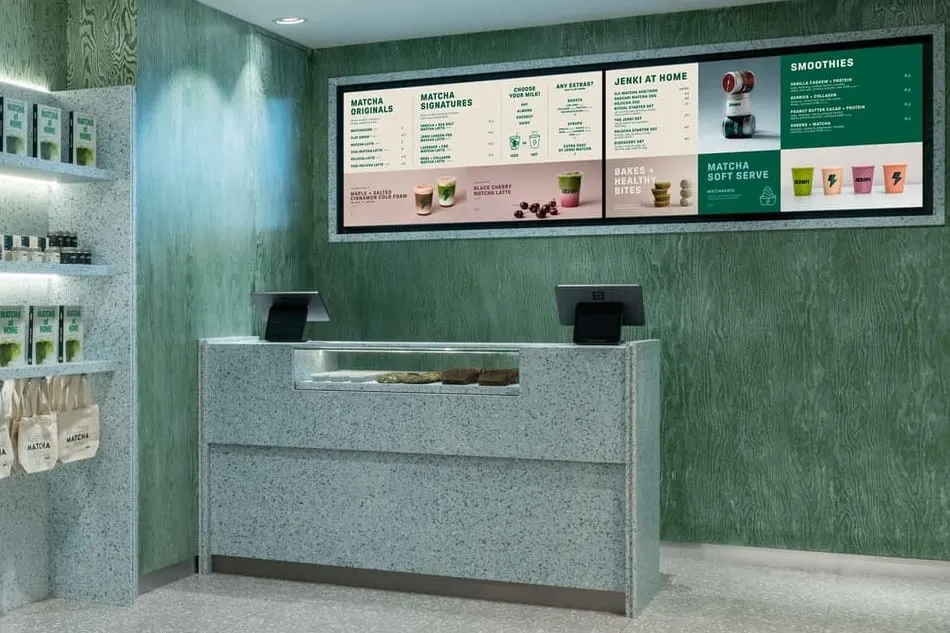
For years, matcha has been a coffee shop add-on, a wellness flourish or a green drink for the Instagram grid. Now, with dedicated matcha bars multiplying and consumer appetite deepening, the category is beginning to build a world of its own. Claudia Boyer, co-founder of Jenki, explains why matcha is going from coffee shop passenger to café pilot
Jenki was built as a matcha café business from the very start, and for a while, coffee felt like a safe bet to come along for the ride. However, espresso-based beverages made up just 4% of Jenki’s sales when it dropped coffee completely in 2023.
The London-based operator hasn’t looked back. Less than three years on, Jenki now operates six matcha bars across London – in Canary Wharf, Battersea Power Station and within Selfridges on Oxford Street – and is opening five more before the end of 2026.
Meanwhile, coffee shops have embraced matcha as a menu mainstay, and they’re still where most consumers get their first taste of revered Japanese green tea. However, such is the strength of demand, matcha is now carving a market niche of its own.
Having infiltrated coffee shop menus globally, could matcha challenge the café format itself? There are signs this is already happening.
Blank Street, which dropped ‘coffee’ from its name in late 2025, reports that matcha now accounts for more than 50% of its beverage sales in the US and UK. In early 2026, Starbucks reported tea sales at US company-owned stores rose 70% since 2022.
Unlock Allegra Premium News & Insights
Already have an account? Sign In