


When Lavazza officially launched La Reserva de ¡Tierra! Selection on International Earth Day in April 2026, it introduced more than just a new coffee product – it showcased a new approach to coffee production, combining product quality with a certification focused on regenerative agriculture
The 100% arabica Brazilian natural and Honduran washed blend is the culmination of Lavazza-backed regenerative agriculture projects in both countries that are built on direct community engagement and collaboration at the farm level.
La Reserva de ¡Tierra! Selection is the first coffee to carry dual certification under both the Rainforest Alliance Sustainable Agriculture Standard and the newly established Rainforest Alliance Regenerative Agriculture Standard. Together, these labels represent a comprehensive, independently audited and measurable approach to build climate resilience and restore ecosystems with a focus on supporting coffee farmer livelihoods.
Why regenerative agriculture?
Coffee is among the crops most acutely exposed to the climate emergency. Rising temperatures, increasingly erratic rainfall, prolonged drought, and the spread of disease are already impacting yields and quality across major coffee-producing regions, particularly among the 12.5 million smallholder farmers who are estimated to produce 60% of the world’s coffee.
Regenerative practices contribute to improving soil health, water retention, shade cover and biodiversity in ways that directly counter these adverse conditions.
Agroforestry systems help to buffer temperature extremes and stabilise the microclimate, protecting the conditions necessary for consistent coffee development. Restoring organic matter to soil sequesters carbon, meaning that these farms contribute to broader mitigation efforts while building climate resilience at the local level.
It may sound revolutionary, but regenerative agriculture is not a new concept. Many of its core practices, including agroforestry, organic composting, shade management, and water stewardship, have long been part of traditional farming systems.
However, the contemporary movement enables these practices to be applied with greater precision, measured through structured scientific frameworks, with outcomes verified through independent certification. It’s also aimed at improving yields and, finally, can translate into better income opportunities for producers.
The Rainforest Alliance Regenerative Agriculture Standard focuses on five interconnected impact areas: soil health and fertility, climate resilience, biodiversity, water stewardship, and farmer livelihoods.
It builds on the non-profit’s existing sustainable agriculture requirements but goes even further with an approach that prioritises the active restoration of ecosystems over preservation alone.
Jose Sanchez, a coffee grower in Siguatepeque in Honduras, part of the Lavazza La Reserva de ¡Tierra! Selection project, describes regenerative agriculture as “respecting the resources that agriculture depends on.” He also praises the return of lost ancestral farming practices that work with nature, not against it.
“Instead of deteriorating the soil and natural resources, we regenerate them; we restore them to how they were before. What we harvest, what is left over, we always try to return it to the land as organic matter,” he says.
“It makes the land better and stronger”
Jose Sanchez, a coffee grower in Siguatepeque in Honduras, part of the Lavazza La Reserva de ¡Tierra! Selection project
A distinctive coffee blend rooted in community
La Reserva de ¡Tierra! Selection combines natural arabica from Brazil, sourced from Mundo Novo and Catuai varieties, which brings body and the blend’s dried fruit and chocolate notes. The washed arabica from Honduras, a blend of Parainema and Icalia varieties, contributes sweetness, acidity, and the delicate floral notes, notably jasmine, that define the cup’s finish.
The combination produces a balanced, medium-bodied espresso designed for consistent performance in professional foodservice and café environments.
The Brazilian coffee is sourced from a Lavazza R&D project in the Minas Gerais region, launched in 2025 in partnership with Exportadora de Café Guaxupé. The project focuses on implementing regenerative agriculture practices towards early certification.
La Reserva de ¡Tierra! Selection also includes coffee from the region of Minas Gerais in Brazil, where the Lavazza Foundation supports over 300 coffee producers with training to improve agricultural practices and workers’ well-being.
The Honduran origins are sourced from farms that have undergone structured transitions to meet the Rainforest Alliance Regenerative Agriculture Standard. Since 2023, Lavazza has worked directly to support an early implementation programme for regenerative agriculture in Honduras, funding training, technical assistance, and operational guidance that enabled more than 70 farms to achieve certification.
Through active community participation, regenerative agriculture practices are tailored to specific ecosystems with the aim of creating viable, scalable and equitable agricultural practices.
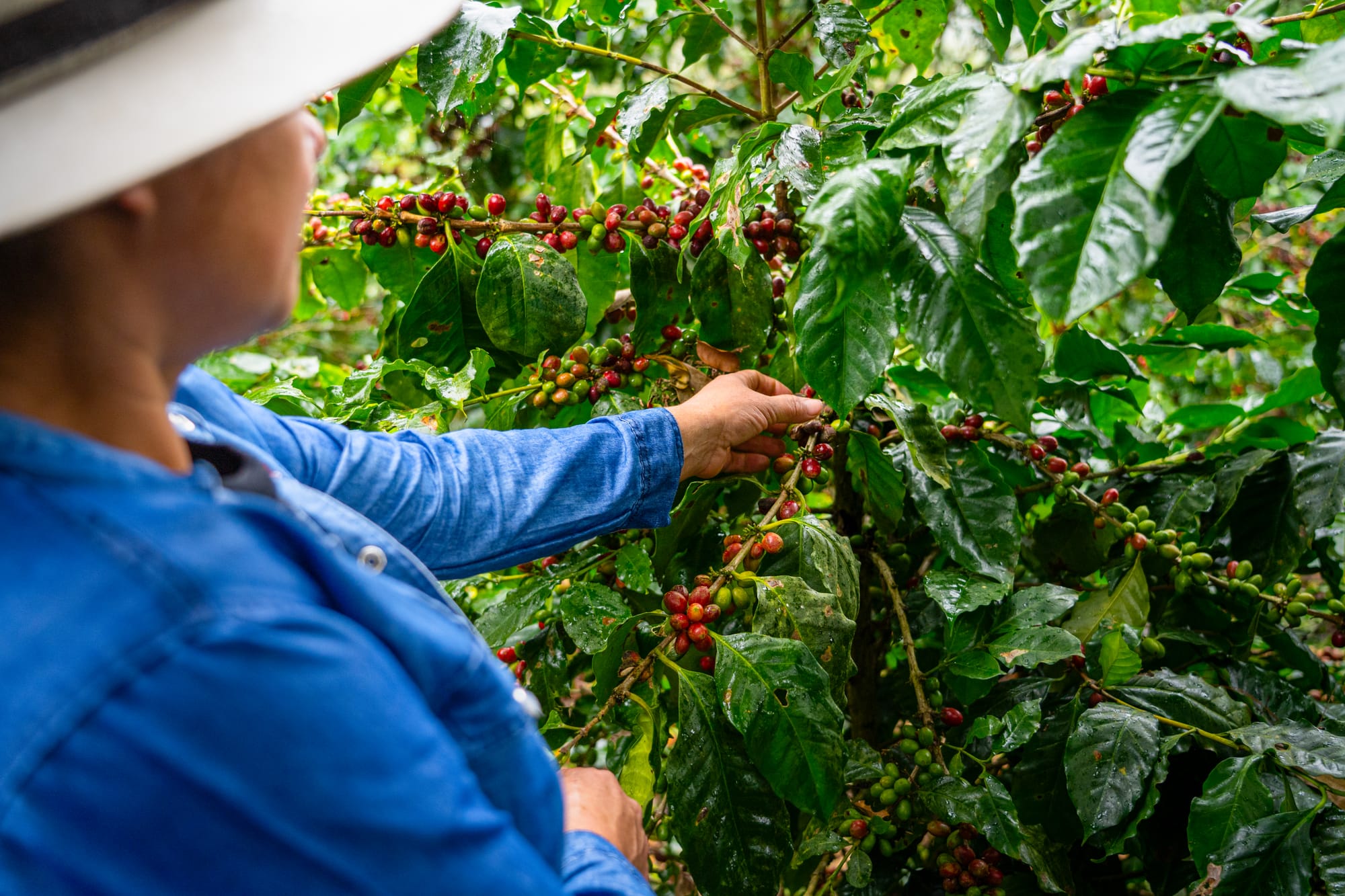
For Jose Sanchez’s farm, this has involved the selection of disease-resistant coffee varieties, improved water infiltration through pruning management, rainwater capture using entirely self-managed systems, and the integration of shade trees and fruit trees to support the broader ecosystem.
“What does this do to our soil? It makes the land better and stronger,” he says. “A farm without shade has no life.”
Edward Arias, who is also a grower in Siguatepeque, Honduras, corroborates the long-term benefits of this approach.
“Four years ago, we implemented regenerative agriculture because it helps us improve the soil, and you could already see the change quite clearly, both in the soil and in the plants. It does cost a little more, but when it comes to production time, it gives us more yield,” he says.
Value that travels
For coffee farmers, the case for regenerative agriculture extends beyond environmental resilience into economic benefit. Dual certification also translates into higher income for farmers.
“The certification becomes that assurance for the consumer. At the same time, this also translates into better income for producers, because they can sell their coffee as a differentiated product,” Sanchez explains.
Those benefits reverberate through the coffee supply chain. For coffee operators, La Reserva de ¡Tierra! Selection addresses growing consumer expectations for sustainability that is traceable, evidenced and backed by robust science. Certified regenerative agriculture provides a concrete, independently verified framework that delivers on those expectations.
For Lavazza, attention to coffee quality and to the communities involved in coffee production has long been an important part of its approach. La Reserva de ¡Tierra! Selection reflects this commitment by bringing together the company’s 130-year-old coffee expertise with regenerative agriculture practices.
Learn more about Lavazza’s La Reserva de ¡Tierra! Selection and regenerative agriculture projects at: ra.org/Lavazza