

Kelachandra Coffee is a pioneer of progressive, sustainable and high-quality coffee production in India. Its leadership team took time out to discuss the climate emergency, staying on top of global trends, and why the time is right for Indian-grown coffee to take on the world’s best
India’s Western Ghats are a UNESCO World Heritage site and home to one of Earth’s most abundant and biodiverse ecosystems. Under the thick canopies of dense trees surrounded by 4,000 plant, 508 bird and 120 mammal species, Kelachandra’s 15 Rainforest Alliance-certified coffee estates across Chikmagalur, Karnataka and Kerala produce some of India’s finest and most sustainable coffees.
Kelachandra Coffee, part of agricultural consortium Kelachandra Group, has grown from 1,000 acres in 1995 to over 6,500 acres today, with a 70-30% split between robusta and arabica, respectively.
Today, it is India’s largest privately held coffee plantation company, producing 2,000 tonnes of coffee annually. In its early days, Kelachandra mostly exported coffee to Australia, Europe, the US, and Japan. However, the group is seeing growing domestic demand as India embraces coffee and café culture like never before.
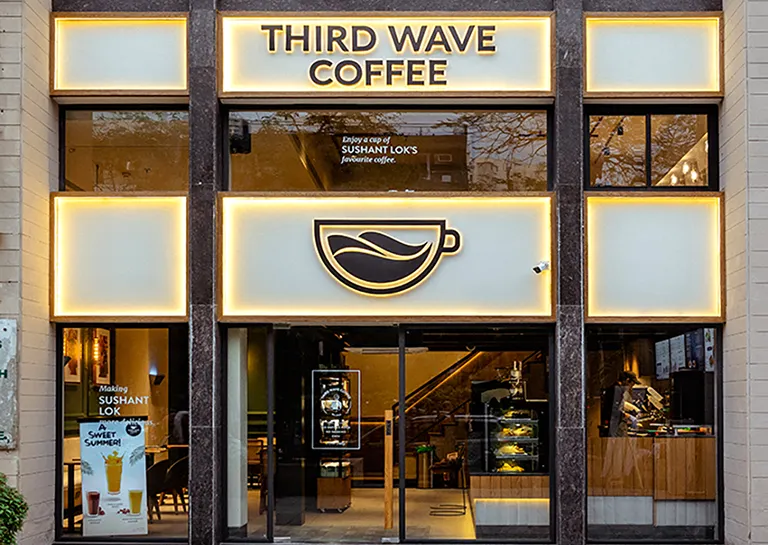
Prominent Indian coffee chains, such as Blue Tokai, Third Wave Coffee and Craft Coffee are all customers, and today Kelachandra produces around 30 tonnes of specialty-grade coffee every year.
“In the past five years, we’ve acquired more estates and have really started to focus on specialty coffee,” says Ryana Kuruvilla, Kelachandra’s Head of People and Culture.
India is undoubtedly awakening to the vast economic and cultural potential of its coffee-producing industry. But what sets Kelachandra apart is a dedication to conservation, empowering coffee-growing communities and a sharp focus on technology to drive innovation, quality and sustainable operations.
“We pride ourselves on the investment we put into our people”
Women make up 55% of Kelachandra’s workforce – including its senior leadership team, Neleema Rana George, Head of Coffee Works and Technology; Ryana Kuruvilla, Head of People and Culture and Rishina Kuruvilla, Head of CSR and Sustainability.
“We pride ourselves on the investment we put into our people. We give them the best accommodation, we provide training, and we help them to improve their financial literacy. The other major point is that the majority of our workforce comprises women, and we want to invest in their children, so we provide access to things like childcare, education and healthcare,” says Ryana Kuruvilla.
It’s an approach that provides economic and societal boost to India’s rural coffee-growing communities – but it is also a solid investment in quality and productivity.
“The higher standards across our plantations are one of the reasons we don’t have a shortage of labour. We really look after our people, and this is the legacy that we want to leave behind,” says Rishina Kuruvilla.
Environmental sustainability is also deeply embedded across Kelechandra’s lush estates. It’s an approach underpinned with state-of-the-art technology straight from the fields of some of the world’s most advanced commercial growers.
“We have invested in world-class technology, much of which has been imported from Colombia and Brazil, says Neleema Rana George. “Automation has reduced the time it takes to produce our coffee and freed up labour for other tasks. These machines have also enabled us to reduce water consumption while improving quality. We send our estate managers to Brazil for training and to learn new techniques so that we can incorporate both traditional and modern techniques into our plantation processes.”
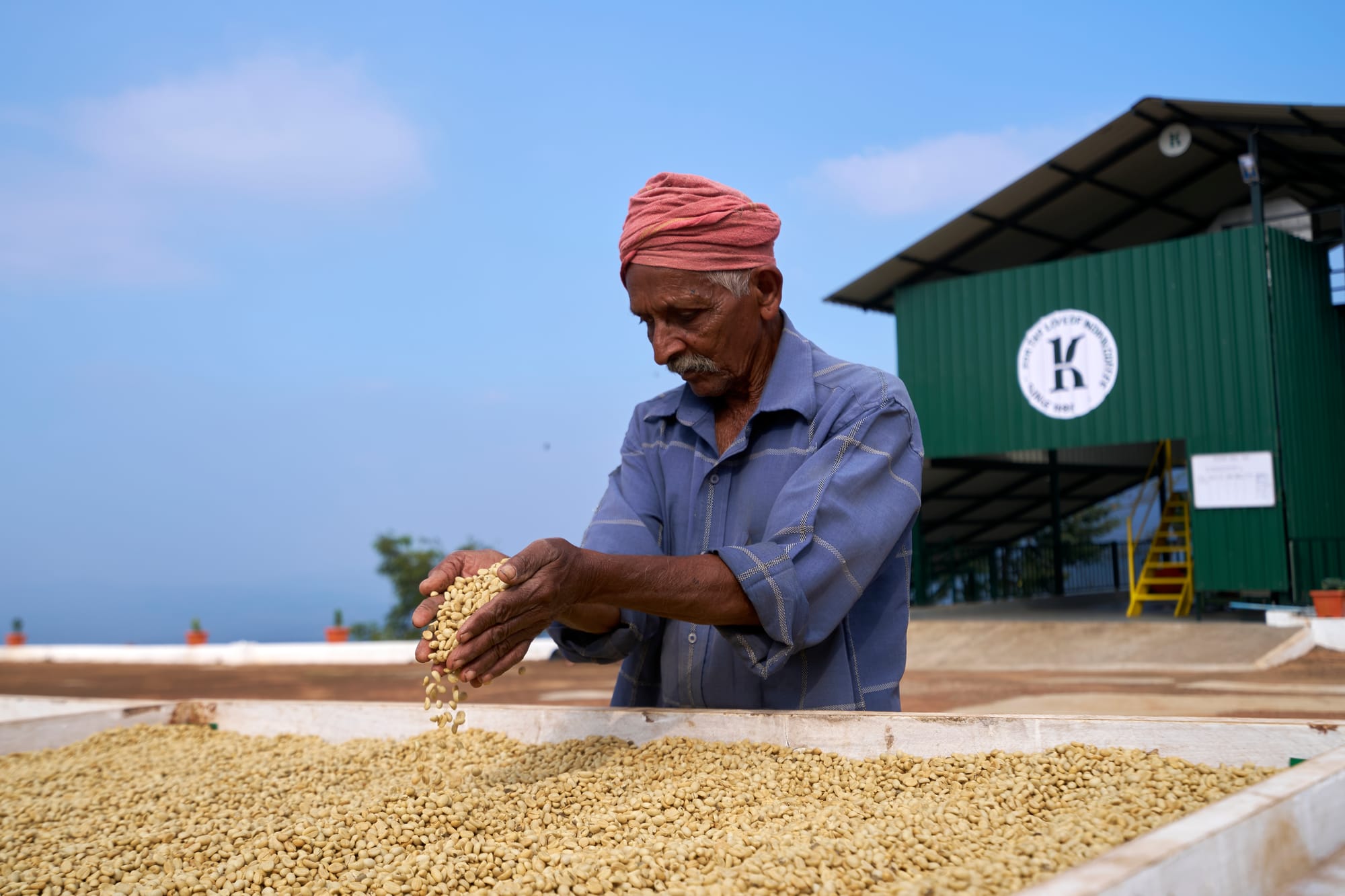
In December 2025, Kelachandra took the next leap in its digital evolution by partnering with Bangalore-based agri-tech start-up Deepflow Technologies. The project will see Augmented Weather Stations (A-WS) installed across its 15 estates. These will play a key role in weather building climate resilience and optimised resource allocation through real-time data collection.
“Climate volatility is no longer a distant threat; it is a daily reality for coffee growers. By integrating Deepflow’s hyperlocal intelligence, we are moving from reacting to extreme weather to proactively adapting to it. This technology guides us in varietal selection and agroforestry planning, ensuring long-term sustainability of our estates,” says Rishina Kuruvilla.
Kelachandra is roundly embracing technology to achieve its sustainability goals. Yet, sustainable agriculture practices remain at the heart of the approach. These are guided by traditional agronomy that is low-tech, but extremely effective – and commercially advantageous.
Because most of Kelachandra’s coffee is shade-grown, getting EUDR-compliant was a breeze.
“The good thing about Indian plantations is that everything is shade-grown and we hand-pick, so that was already a huge advantage for us,” says Ryana.
When it comes to hot trends in the coffee industry, Kelachandra has its finger firmly on the pulse with co-fermenting. “We try different fermentation processes depending on our client’s requirements,” says Ryana, outlining Kelachandra’s recent successes with honey and sugarcane.
“We’ve also experimented with many of the fruits that grow on the estate, including jackfruit, pumpkin, pineapple and orange. These crops grow alongside our estate as well, and since everything is shade grown and there’s a lot of intercropping,” Ryana adds.
Indian consumers are increasingly switched on to the vast coffee-growing heartlands on their doorstep, and they’re keen to explore what is fast taking its place as one of the nation’s prized products.
“Indian people are just starting to appreciate coffee, so they haven’t really explored a lot of other origins yet, and they’re trying out Indian coffees,” Ryana Kuruvilla says.
That gives Kelachandra a unique opportunity to tap into one of the world’s fastest-growing coffee markets, and to this end, the team is already developing its first branded retail range.
But Kelachandra wants to ensure that more Indian coffee is being enjoyed both at home and abroad. The dynamic trio behind this rising star producer have hit the trail globally, showcasing their remarkable coffees and unique story at World of Coffee events from Busan to Copenhagen, Dubai, Jakarta and Geneva.
Kelachandra has the wind in its sails and is charting a course towards a more sustainable, ethical, and quality-driven future for the coffee industry. With this dynamic team at the helm, it surely won’t be long before more Indian specialty coffee takes its rightful place among the best in the business.