
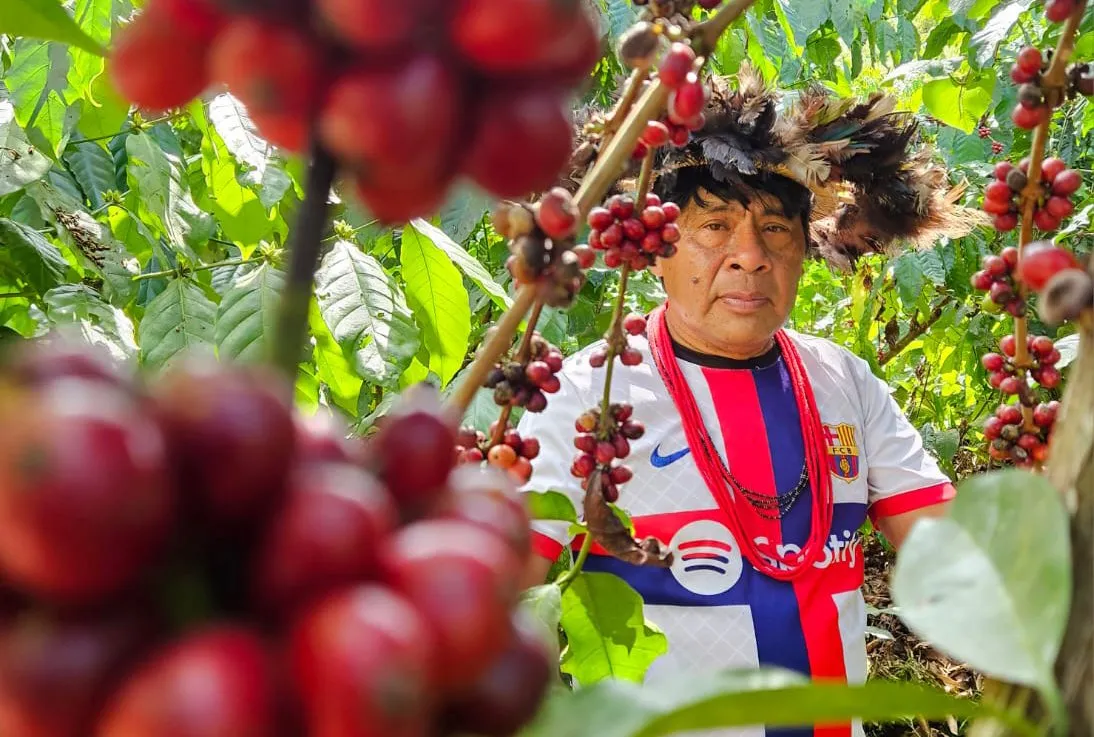
From maligned crop to award-winning beans, the Brazilian state of Rondônia is a rising star of high-quality robusta. Cristiana Couto travelled to the heart of the Amazon to find out how sustainable agriculture can produce some of Brazil’s finest coffees while supporting communities and protecting fragile ecosystems
When the 30th UN Conference on Climate Change (COP30) commenced in Belém, Brazil, in November 2025, scientists, coffee growers and representatives from Rondônia presented the northwestern state’s coffee industry as an exemplar of sustainable and regenerative cultivation in the heart of the Amazon rainforest.
At AgriZone – a space set up by Embrapa Amazônia Oriental and its partners to showcase technologies developed by the institution for Brazilian agriculture – 3,000 coffee seedlings were displayed as lectures, video screenings and tastings shed light on the revolution led by Amazonian robusta.
In just 15 years, high-grade robusta production in the state has soared thanks to highly resource-efficient and environmentally sustainable agriculture.
Speaking ahead of the annual climate summit, agricultural engineer Enrique Alves, a researcher at sustainable agriculture organisation Embrapa Rondôniam, and a pioneer transforming the quality of Amazonian robusta coffees, said: “For COP30, we will bring climate resilience through genetics and value aggregation through quality and sustainability.”
Unlock Allegra intelligence for just £1
Already have an account? Sign In