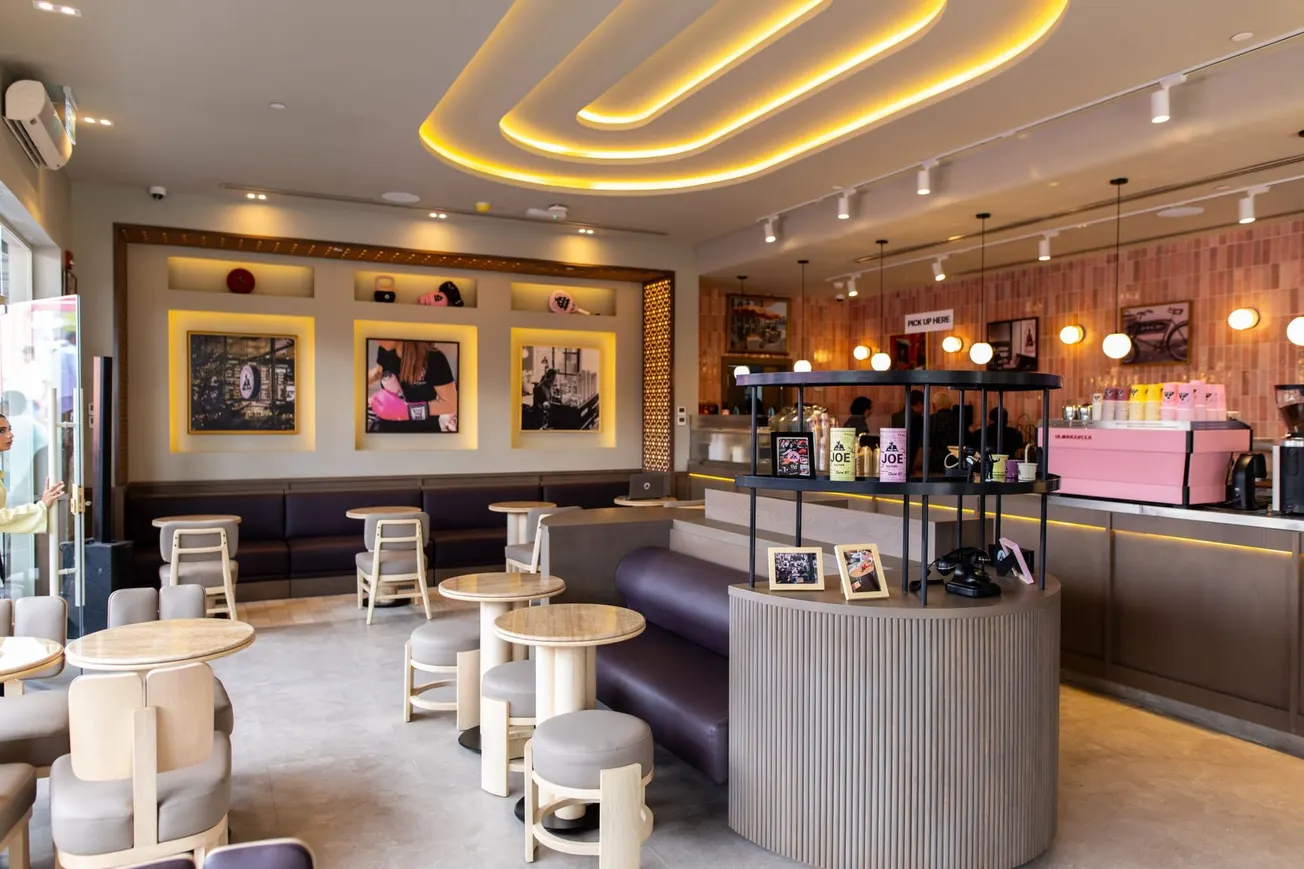

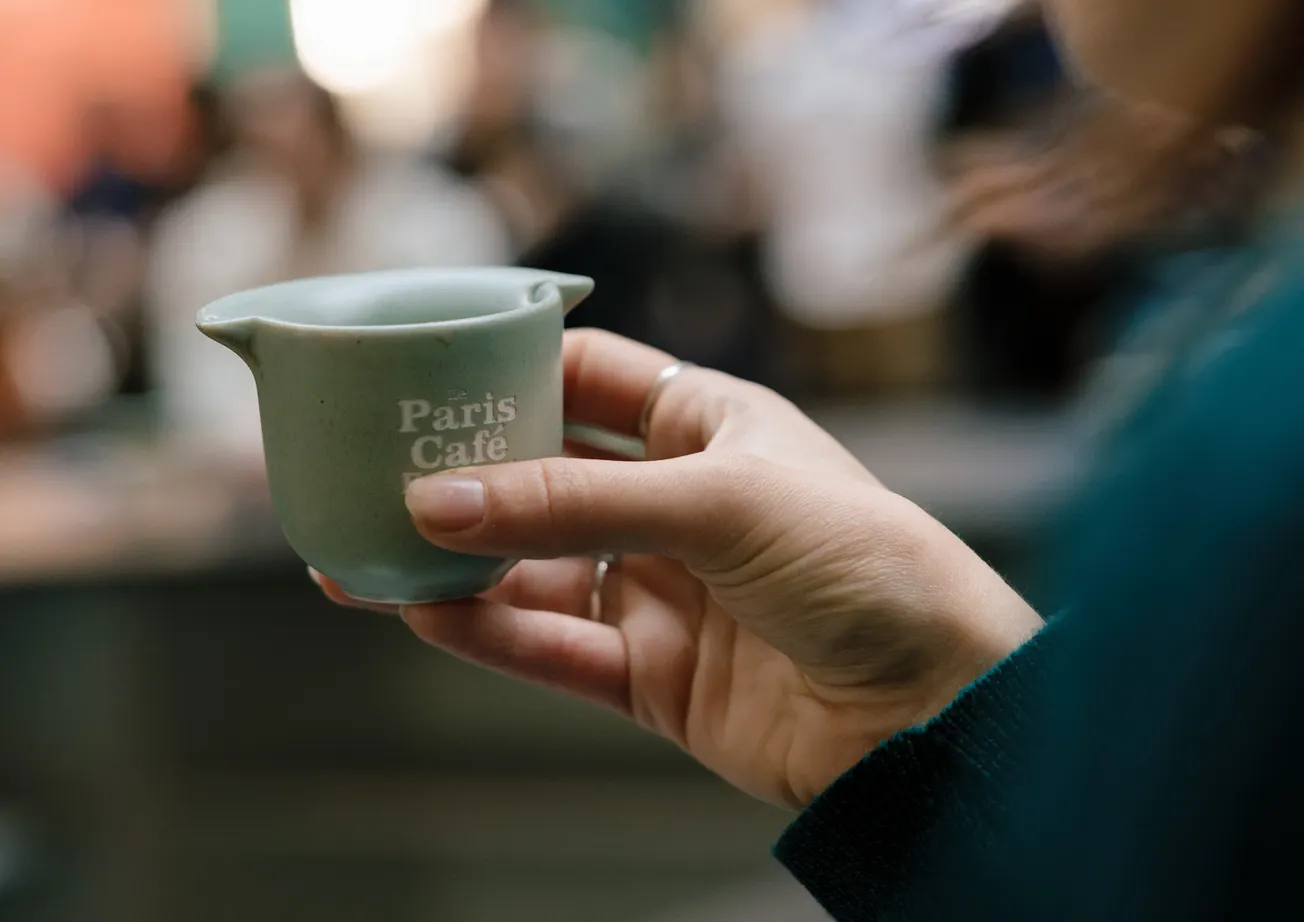
The annual celebration of France’s revered coffee industry opened its doors at Paris’ Carreau du Temple on 11 April 2026. Spread across three days, the festival is the must-attend event for industry networking and highlights the latest trends and innovations shaping the sector
The 10 biggest takeaways from Le Paris Café Festival 2026:
1. The European and French coffee markets continue to grow, with strong momentum in specialty: Europe is approaching 60,000 branded outlets, while France alone has c.4,500 chain stores and is rapidly expanding, with specialty coffee gaining share but still representing only a small portion of total volume.
2. France is entering a high-growth phase, with Paris emerging as a leading specialty coffee city: The market is booming, with estimates of up to 10 new coffee shop openings per week in Paris, signalling a major shift from a historically underdeveloped specialty market to one of Europe’s most dynamic.
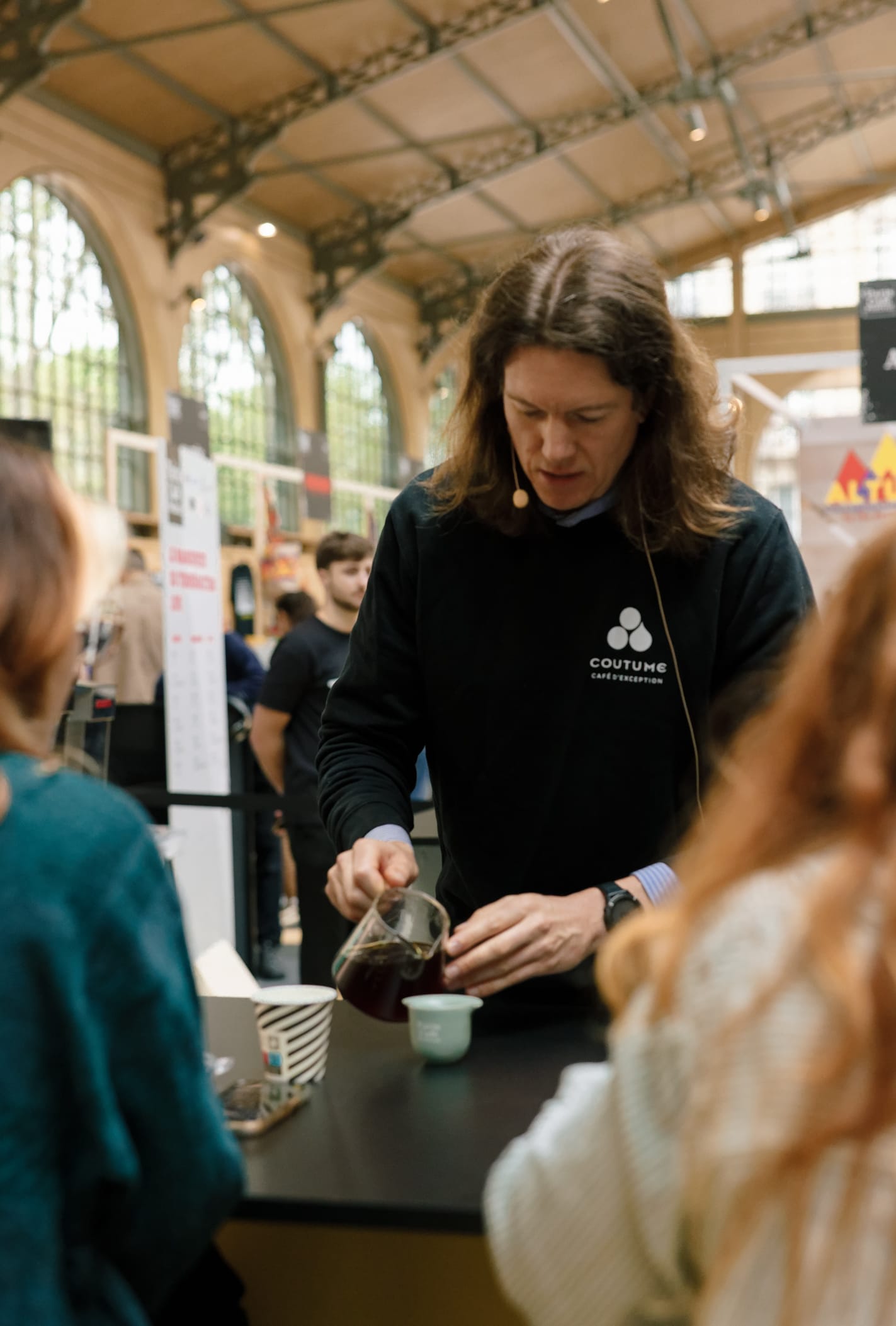
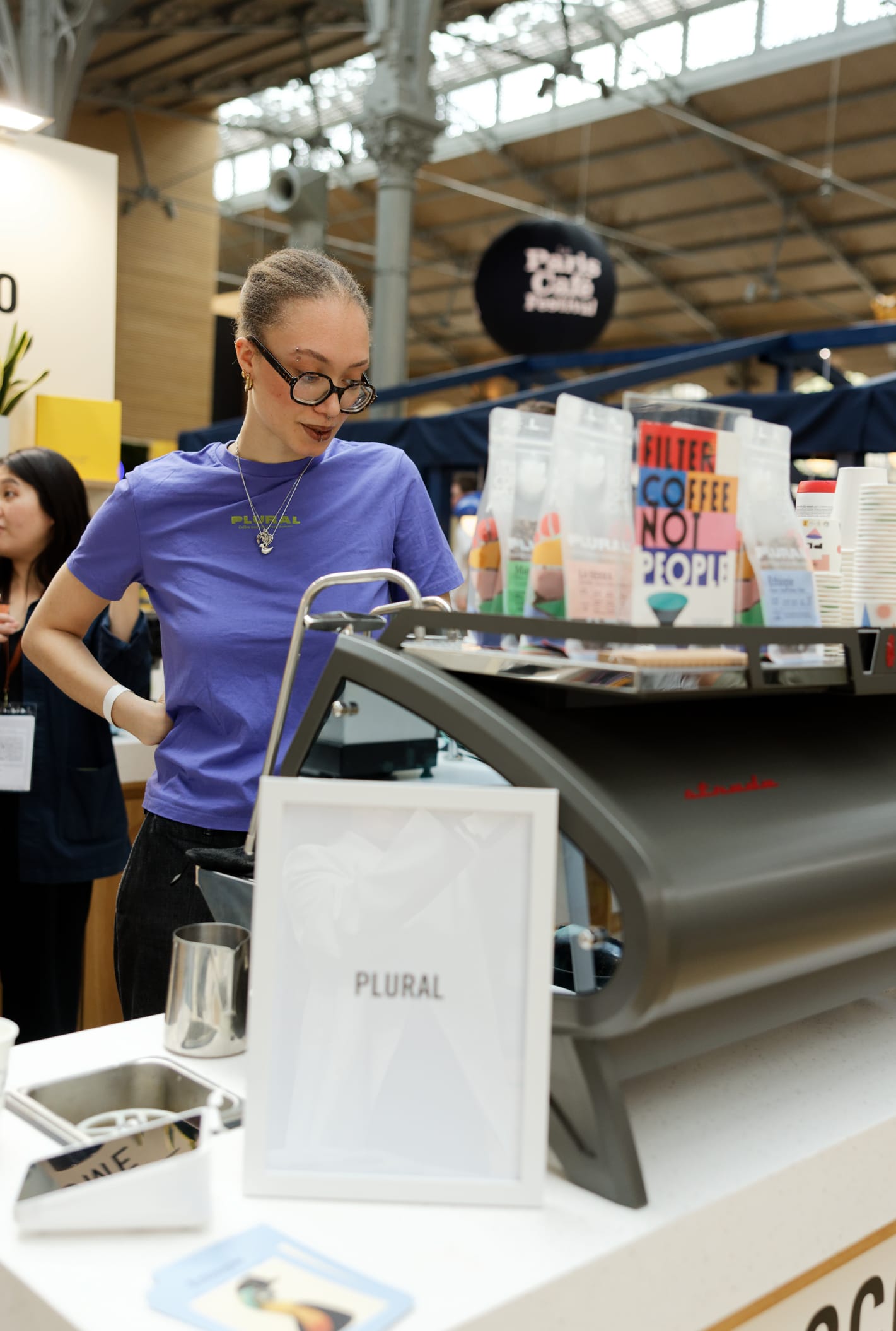
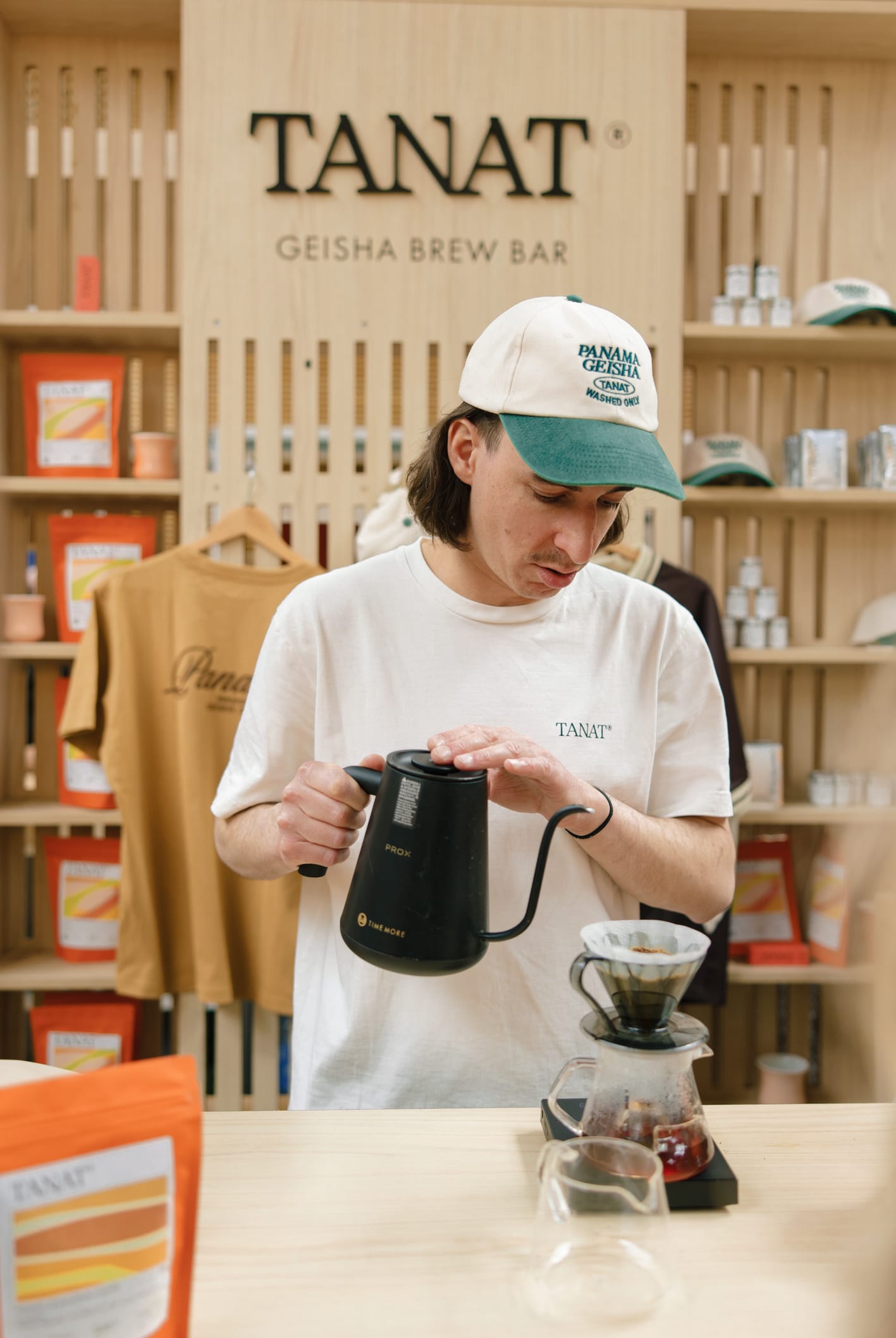
Left to right: representatives of Coutume, Plural and Tanat – three of Paris’ leading specialty coffee roasters | Photos: Le Paris Café Festival
3. The industry is becoming more structured and business-driven: A new generation of operators is more financially backed, operationally-focused and scalable, marking a shift from passion-led pioneers to commercially driven businesses.
4. The global market is polarising between craft, experience-led coffee and high-speed, tech-enabled convenience: From East Asia to Europe, coffee is splitting between premium experiential formats and highly automated, value-driven models focused on speed, delivery and accessibility.
5. Asian coffee culture is now a global force shaping trends, formats and customer expectations: China alone added over 20,000 outlets in a year, with app-based ordering, delivery and hyper-convenience redefining coffee consumption and influencing global markets.
6. Automation is becoming critical to consistency, efficiency and labour challenges: Across equipment, water systems and workflows, automation is enabling better quality control, reducing skill dependency and allowing teams to focus on customer experience.
7. Beverage diversification is accelerating, led by matcha, functional drinks and non-coffee categories: Coffee shops are evolving into broader beverage platforms, with non-coffee drinks acting as both entry points for new consumers and major revenue drivers.
8. The definition of ‘specialty coffee’ is being challenged as the market scales: More venues position themselves as specialty, but quality, sourcing and execution vary widely, raising questions about standards and long-term credibility.
9. At-home coffee is a major growth engine, driven by education, equipment and consumer curiosity: Consumers are more knowledgeable than ever, with growing demand for high-quality home setups, although most still prioritise simplicity and convenience.
10. The winning model is evolving towards accessible quality at scale: The biggest opportunity lies in bridging the gap between high-end specialty and mass-market coffee, delivering better quality in a more approachable, scalable and commercially viable way.
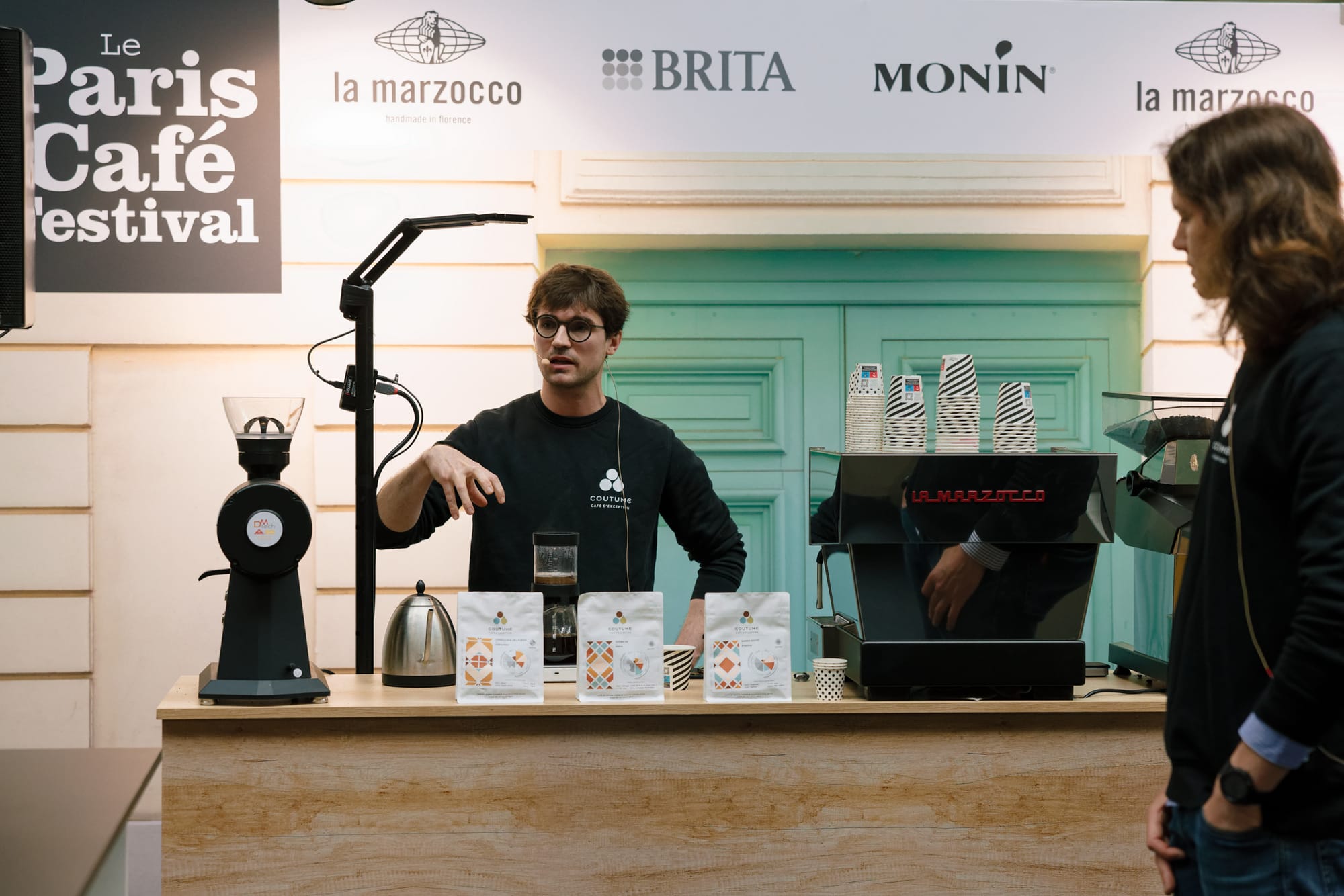
Session 1: Espresso Briefing – Project Café Europe
Jeffrey Young, CEO & Founder, Allegra & World Coffee Portal
Jeffrey Young opened Le Paris Café Festival 2026 with a macro view of the European coffee market, highlighting steady growth, structural resilience and the rising influence of specialty and new beverage categories.
Key learnings:
The European branded coffee shop market is approaching 60,000 outlets and is projected to reach c.70,000 within five years.
Growth remains stable at around 3% annually, despite economic pressure and geopolitical uncertainty.
Value is now more important than price, with consumers seeking consistency, quality and reliability.
Bakery and food-led operators represent a major future growth channel for coffee.
Specialty coffee is booming alongside chains, entering a new phase of consumer adoption.
Iced, matcha and non-coffee beverages are key growth drivers across Europe.
France is emerging as one of Europe’s fastest-growing specialty markets, closing the gap with the UK.
Session 2: The Asian Coffee Market – Business Insights
Richard Colchester, Senior Analyst, World Coffee Portal
This session explored the scale and speed of the Asian coffee market, highlighting how technology, convenience and youth culture are reshaping global coffee consumption.
Key learnings:
China added over 20,000 outlets in a single year, making it the fastest-growing coffee market globally.
The East Asian branded coffee shop market now exceeds 180,000 outlets and is projected to reach over 260,000 within five years.
Markets are driven by highly tech-enabled models, including app ordering, delivery and hyper-personalisation.
Up to 20% of coffee orders in China are delivery-based, far higher than in Western markets.
The market is polarised between low-cost convenience and high-end experiential coffee.
Younger consumers are the primary growth engine, shaping formats, branding and product innovation.
Coffee is increasingly replacing alcohol as a social occasion, particularly among younger demographics.
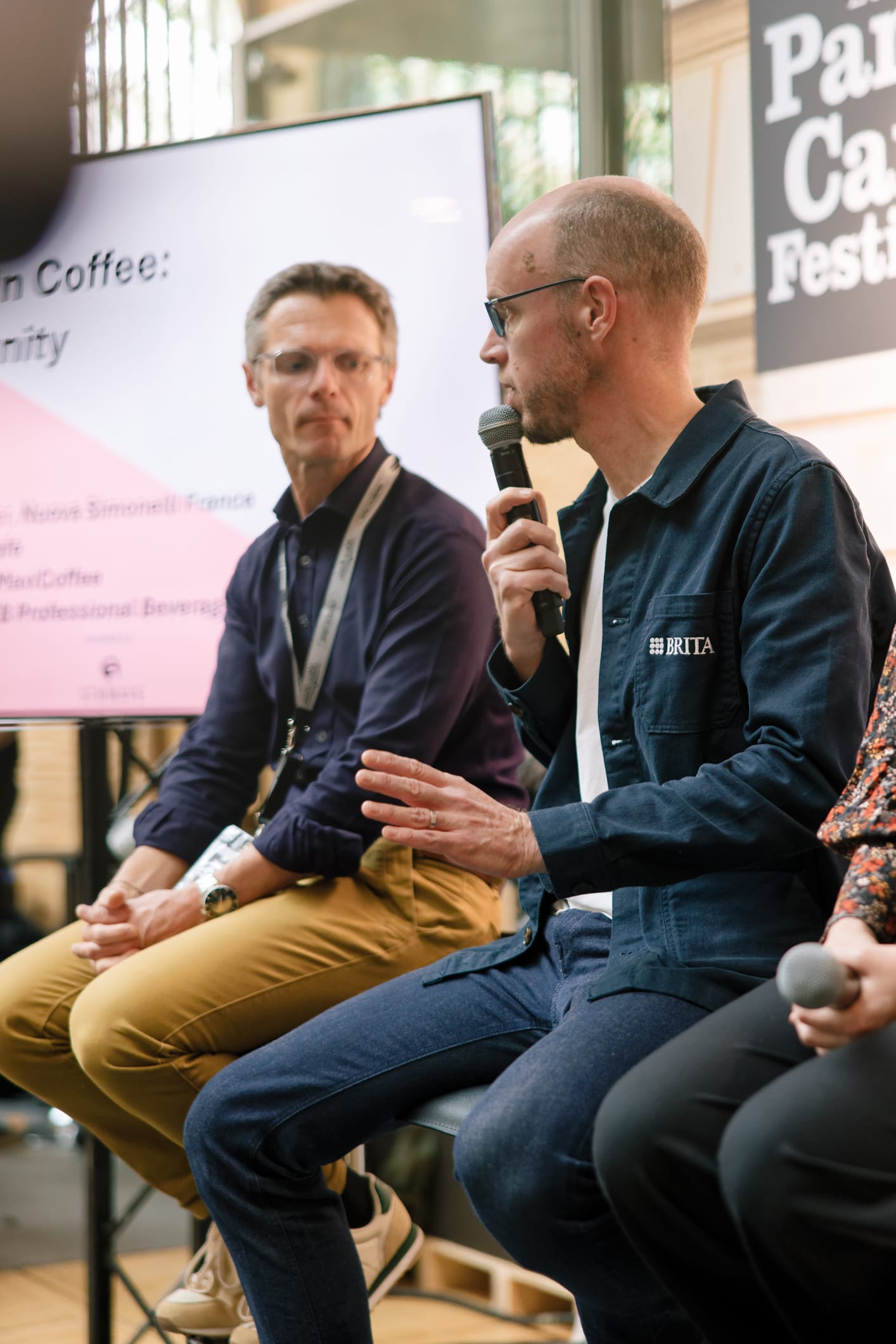
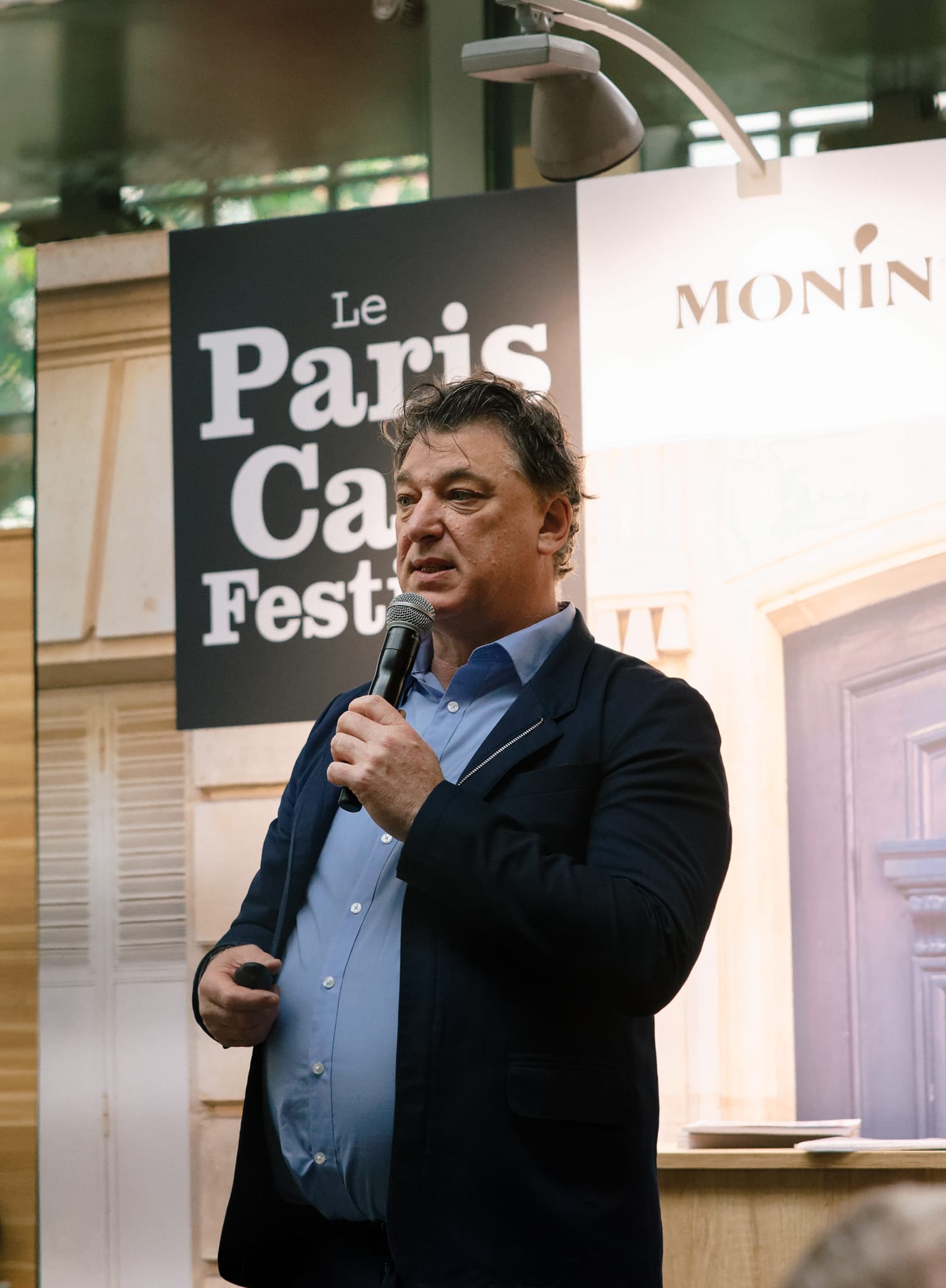
Le Paris Café Festival 2026 panellists, including Allegra Group Founder and CEO Jeffrey Young (centre) | Photo: Le Paris Café Festival
Session 3: Project Café France – Business Insights
Jeffrey Young + Panel
This session focused on the rapid evolution of the French coffee market, highlighting strong growth, increasing competition and a shift towards more structured business models.
Key learnings:
France is the fifth-largest branded coffee chain market in Europe with c.4,500 outlets.
Specialty coffee still represents only around 3% of total market volume, indicating major growth potential.
Paris is experiencing explosive growth, with estimates of up to 10 new openings per week.
The market has evolved through three phases: pioneers, scaling operators, and now financially driven entrants.
Hospitality, brand experience and concept design are becoming as important as coffee quality.
Education remains a critical gap, with many operators lacking deep coffee knowledge.
The definition of specialty coffee is becoming blurred as more operators adopt the label without consistent standards.
Session 4: Automation in Coffee – The Opportunity
Panel Discussion
This session explored how automation is transforming coffee operations, with a strong focus on efficiency, consistency and labour challenges.
Key learnings:
Automation is primarily used to improve consistency, speed and reliability in coffee production.
Labour shortages and training gaps are major drivers of automation adoption.
Technologies include automated grinders, milk systems, water filtration and data-driven extraction.
Water quality automation is critical, as water represents up to 98% of the final beverage.
Automation reduces repetitive tasks, allowing staff to focus on hospitality and customer interaction.
Data and connectivity are emerging as key tools for optimisation and performance monitoring.
The future lies in “technology-enabled hospitality”, not full automation replacing people.
Session 5: Beverage Trends & Innovation that Converts
Panel Discussion
This session explored how beverage innovation is reshaping the coffee shop offer, driven by consumer curiosity, lifestyle trends and global cultural influence.
Key learnings:
Coffee shops are evolving into broader beverage platforms, not just coffee-led businesses.
Matcha, chai, Ube and functional drinks are major growth categories.
Visual appeal and social media influence are key drivers of product success.
There is a growing tension between functional benefits and taste quality in innovation.
Consumers are increasingly curious about origin, quality and preparation methods.
The “middle market” is strengthening, with more accessible, good-quality offers emerging.
Innovation is driven as much by lifestyle and experience as by the coffee itself.
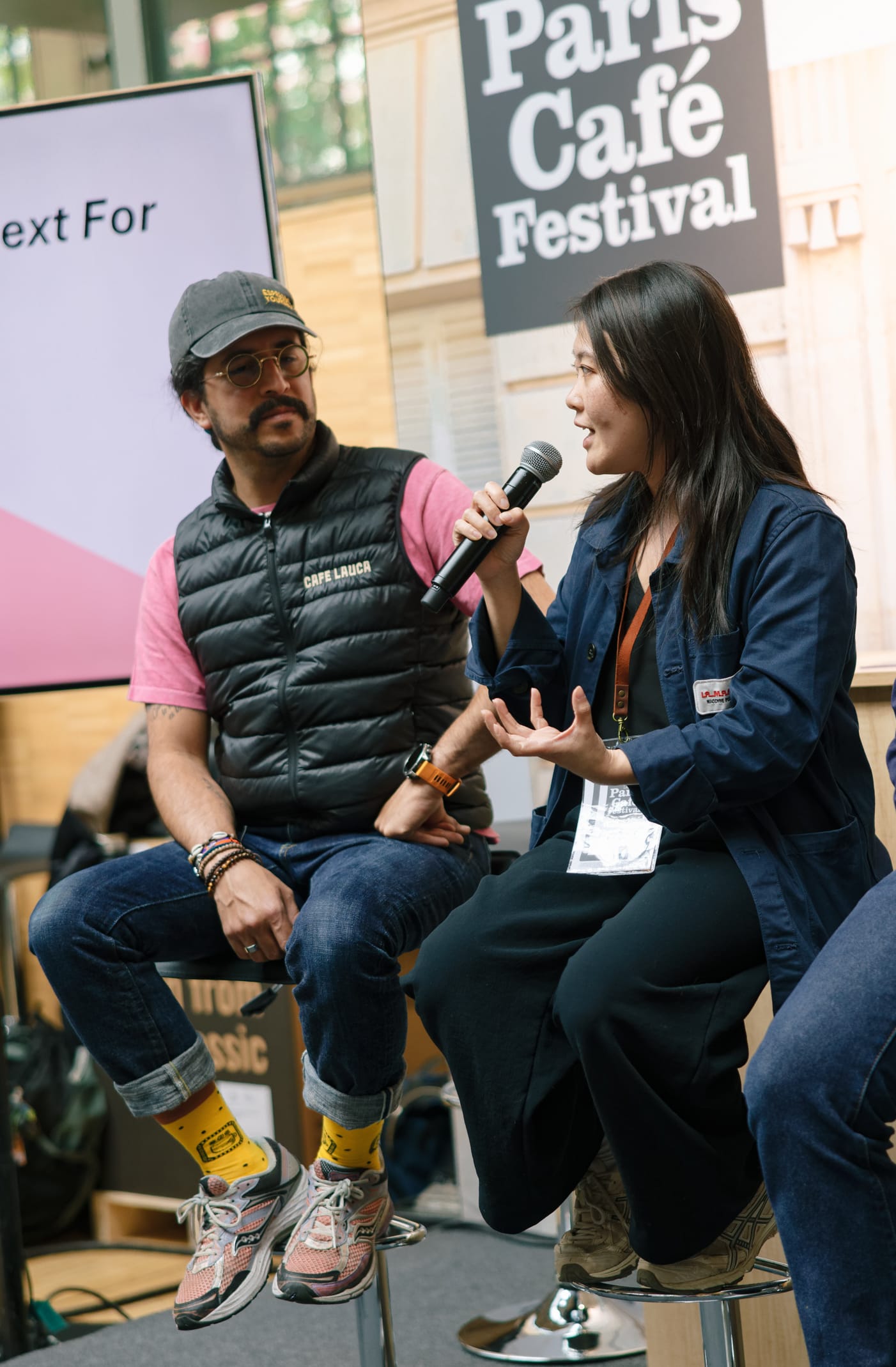
Session 6: Coffee at Home – What’s Next for France?
Panel Discussion
This session examined the rapid growth of the home coffee segment, highlighting increased consumer knowledge, equipment demand and changing behaviour.
Key learnings:
The at-home coffee market has grown significantly, particularly since Covid.
Consumers are far more knowledgeable, with many understanding brewing methods and equipment.
Fully automatic machines dominate the market, with only around 13% household penetration, indicating strong growth potential.
Capsules remain dominant in volume but act as a gateway to higher-quality coffee.
There is a growing “home barista” trend, with consumers replicating café experiences at home.
Education, content and accessibility are key to driving adoption.
The market is split between convenience-led consumers and passionate hobbyists.