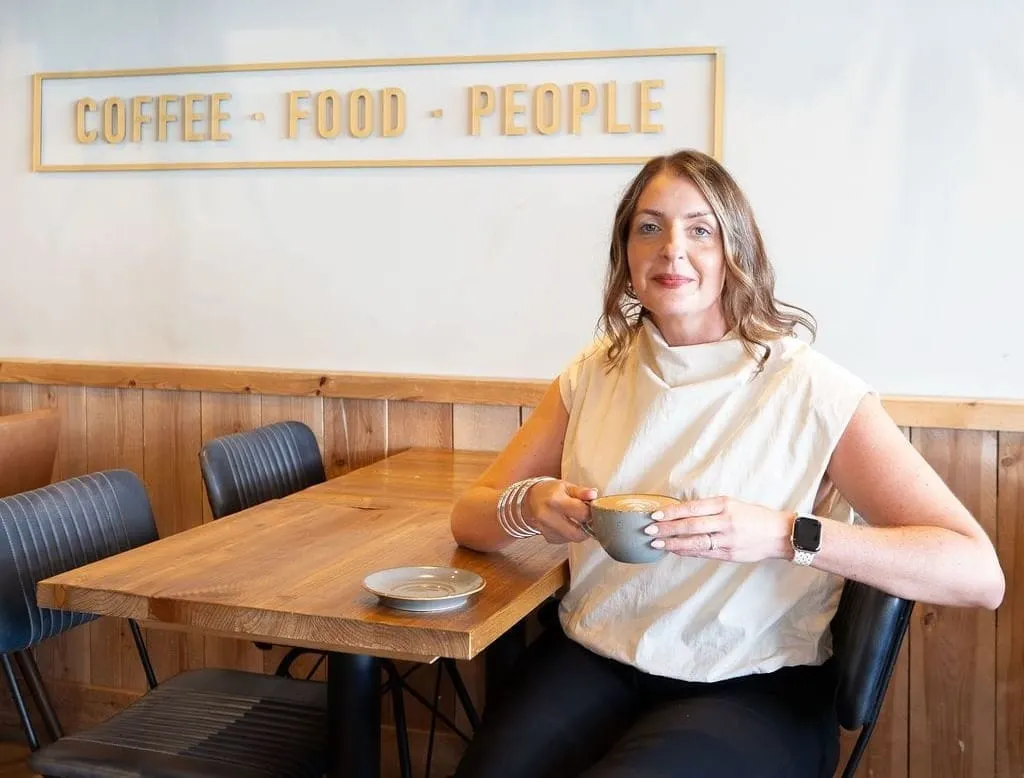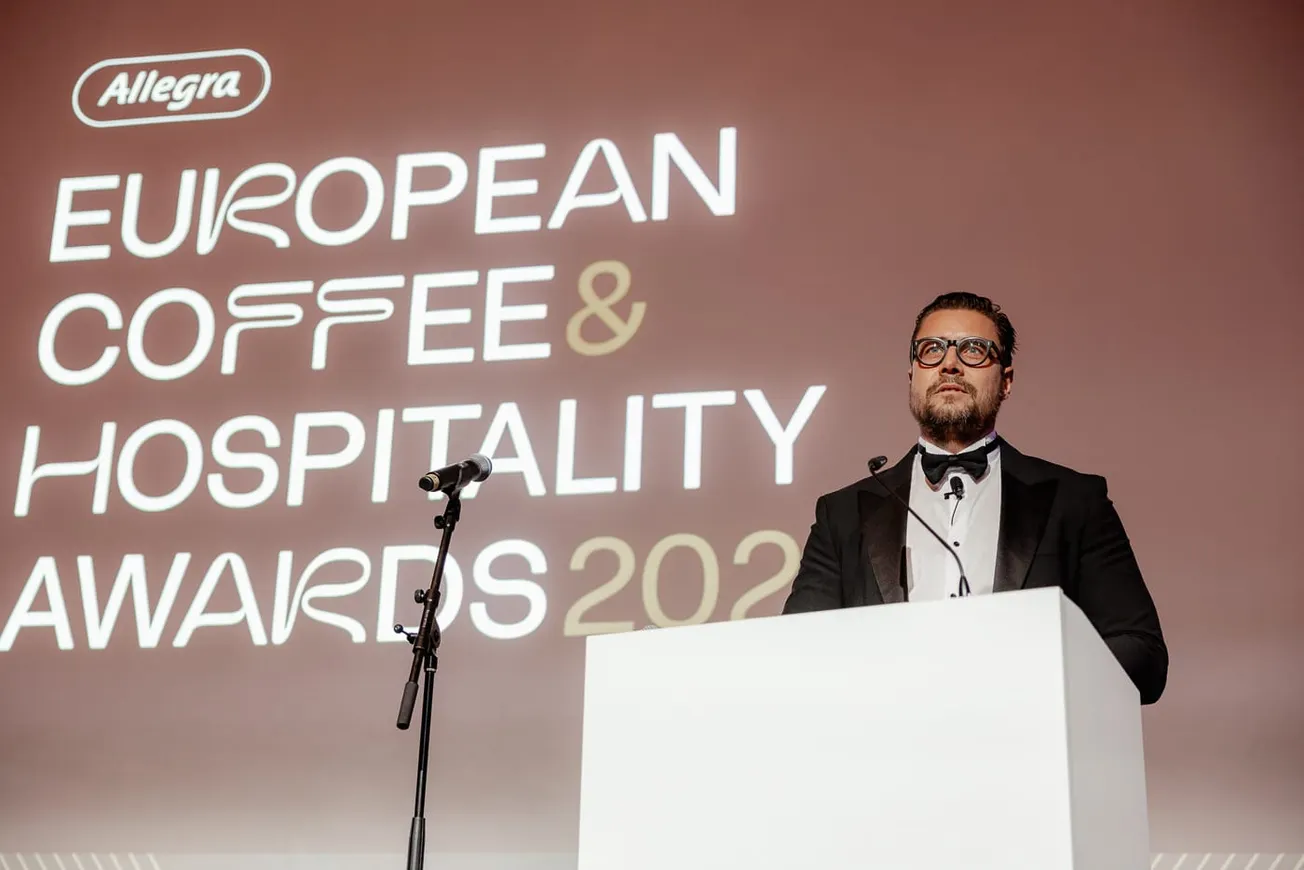

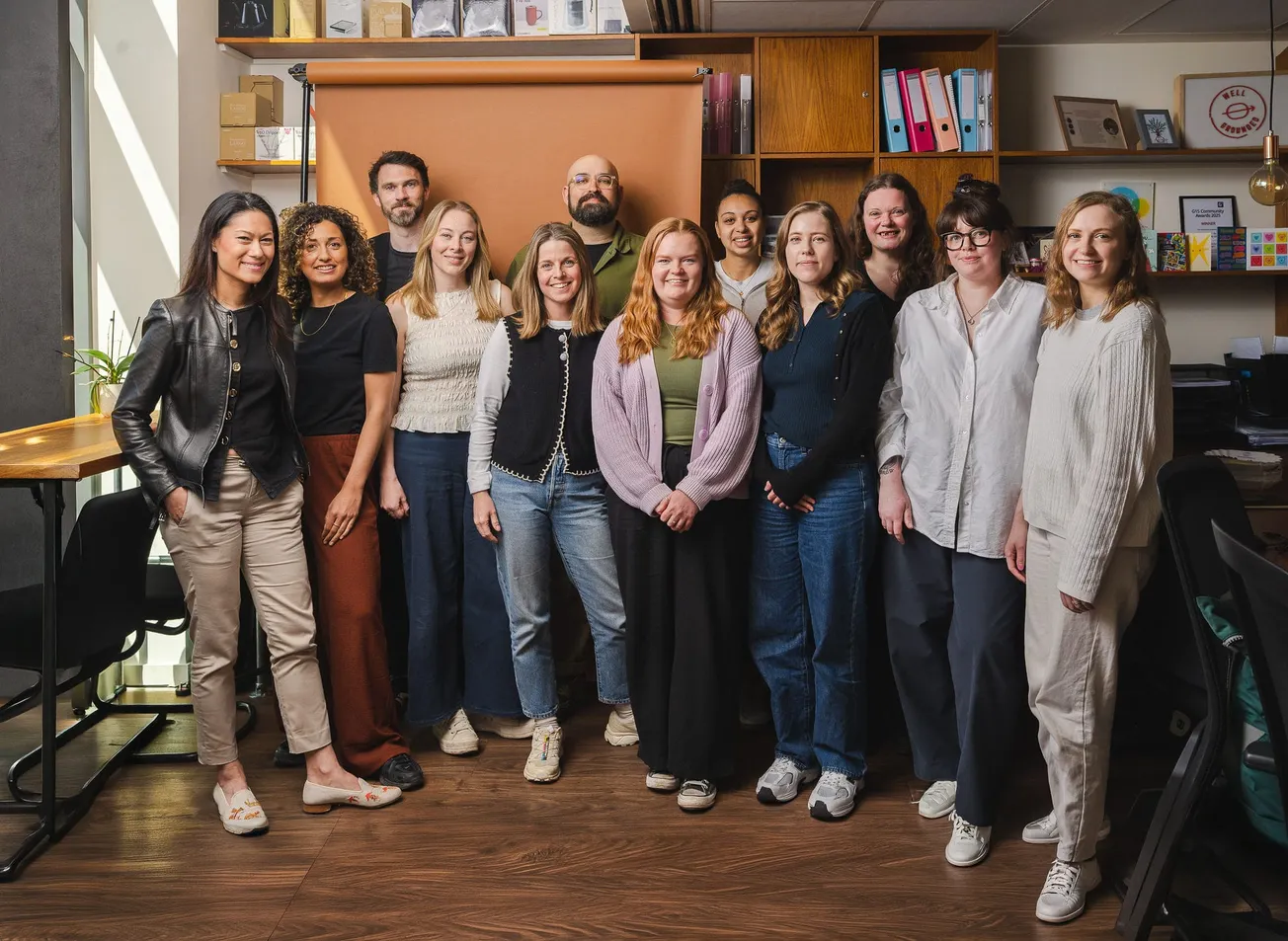
Every time you’re served a coffee marks the conclusion of an epic voyage that spans the planet and touches on the lives of thousands of people. For 10 years, Well Grounded has ensured that coffee’s final destination provides vital training, employment and life skills for young people across the UK. Founder Eve Wagg reflects on a decade of transforming lives through specialty coffee
When Eve ran her first pilot traineeship in the basement of Ozone Coffee Roasters in Shoreditch, London, in 2016, there were just three participants. She still remembers that moment vividly.
A decade later, Well Grounded has trained over 2,000 people, facilitated over 21,000 hours of work placements with employer partners across the industry, and supported 76% of graduates into employment. Today, it operates academies across London, Bristol and Leeds.
When reflecting on the original vision for Well Grounded, Eve says “It’s actually remarkably similar to what it is today. The belief was always that coffee could be a vehicle to support people into careers, as well as being a platform for community and belonging.”
Back in 2010, Eve was working nationally across the charity sector.
“I was involved in the interface between research and practice within education,” she explains “and was really passionate about scaling national programmes supporting children and young people.”
At the same time, she was watching London’s specialty coffee scene transform around her. “I was living in London in my early twenties just as specialty coffee was growing rapidly,” she says. “There was this incredible creativity and entrepreneurial energy emerging across the coffee industry.”
This booming coffee sector was searching for talent and there were thousands of people looking to access work. “I began to see an opportunity to bring those two worlds together,” she says. “I believed coffee had the potential to become a platform for a career, a community and support.”
That idea would eventually become Well Grounded.
From the outset, Wagg says the vision was never simply about barista training. “From the very beginning, it was about creating a space where people could learn, grow in confidence, build relationships and feel part of something,” she explains. “Coffee was the vehicle.”
In 2016, after years of exploring the idea and building relationships within the coffee sector, Wagg left her charity role to launch the organisation full time. What followed relied heavily on the willingness of the coffee industry itself to back her.
“We were incredibly fortunate to have early supporters who believed in the vision,” Wagg says. That small pilot would eventually become the foundation for what is now one of the UK specialty coffee industry’s most visible social enterprises.
Over the years, Well Grounded has developed programmes that combine Specialty Coffee Association qualifications with evidence-based employability support, mentoring, work placements and career progression pathways. One of the most striking things Well Grounded has observed over the past decade is the way coffee environments bring together people across generations and backgrounds.
“In our 10 years, we’ve trained over 2,000 people ranging from 14 to 76 years old,” says Wagg. “When we have broader age ranges learning together, we consistently see incredible peer support, and strong community building,” she explains. That emphasis on community has become increasingly significant against a backdrop of growing social isolation and economic uncertainty across the UK.
At the same time, the specialty coffee industry itself has evolved dramatically over the past decade. Conversations around sustainability, wellbeing, diversity and career progression have become increasingly prominent, while operators continue to face recruitment and retention challenges.
Many Well Grounded graduates now manage cafés, are coffee trainers, work in roasting, operations or have launched their own businesses. “One of the things I’m most proud of is seeing graduates not only enter the industry, but shape it,” Wagg says.
Social sustainability
Sustainability cannot sit separately from education. If the coffee industry wants to retain passionate people, build future leaders and create long-term careers, then access to the full picture of coffee from the beginning is vital, from origin and sourcing to roasting, hospitality, community and environmental sustainability.
“Environmental sustainability is essential in coffee training today,” says Eve. “At Well Grounded we support an understanding of where coffee comes from, the pressures facing producers, and the impact of how it’s served.”
But for Well Grounded, sustainability has always meant something broader. “Our focus is on creating access to opportunity and supporting people into work,” she says. “But we do that by building a community of coffee professionals across the supply chain, many of whom are leading the way on environmental sustainability.”
The result is an educational model that embeds sustainability thinking from the very first week of training. Entry-level trainees are introduced to origin, sourcing ethics and the environmental realities of the supply chain not as an abstract module, but as a living conversation, shaped in part by the trainees themselves.
“Some of our trainees come from coffee-growing countries,” Eve explains. “They bring lived knowledge of origin and of the realities behind the supply chain – which adds a real richness to our Academy spaces and to the learning experience for everyone in the room.”
That richness is not incidental. It is, in many ways, the point. Well Grounded’s three-tier training model – spanning the entry-level Specialty Barista Traineeship, the Coffee Career Accelerator for established professionals, and the Coffee Leaders Programme for those with three or more years of experience – is designed to empower a generation of coffee professionals who understand the full system they are entering.
“We are hopefully empowering trainees so they are connected to the full supply chain, passionate about sustainability, driving real, lasting change.”
The evidence base
Well Grounded’s State of the Coffee Nation report – the organisation’s first major piece of primary research – offers a sobering counterpoint to any sense of complacency about progress.
The report found that 68% of coffee professionals leave the industry within two years, yet 70% say they want to progress in their careers. The barriers are consistent: 29% cite low pay and inadequate benefits, 27% a lack of structured career development, and 25% a lack of clarity around progression routes.
“None of this is particularly new information,” Eve acknowledges, “but for us it validated how much talent wants to stay in the industry.”
The report’s findings directly shaped Well Grounded’s CPD offer – with 71% of learners on its progression programmes achieving a promotion or increase in responsibility within six months. For the sector as a whole, the data makes a compelling case: retaining trained, motivated people is not just a social good, it is an environmental and commercial one.
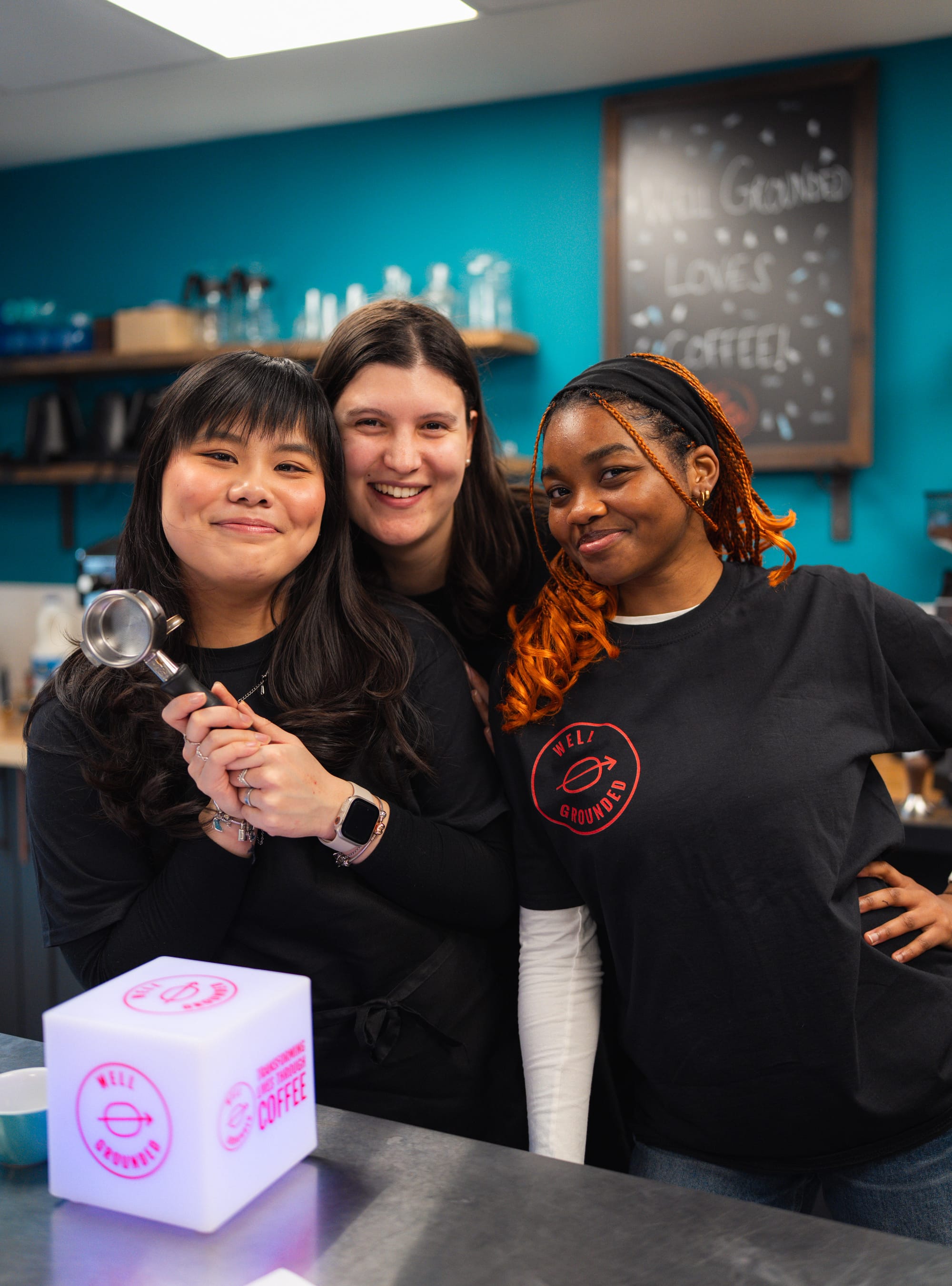
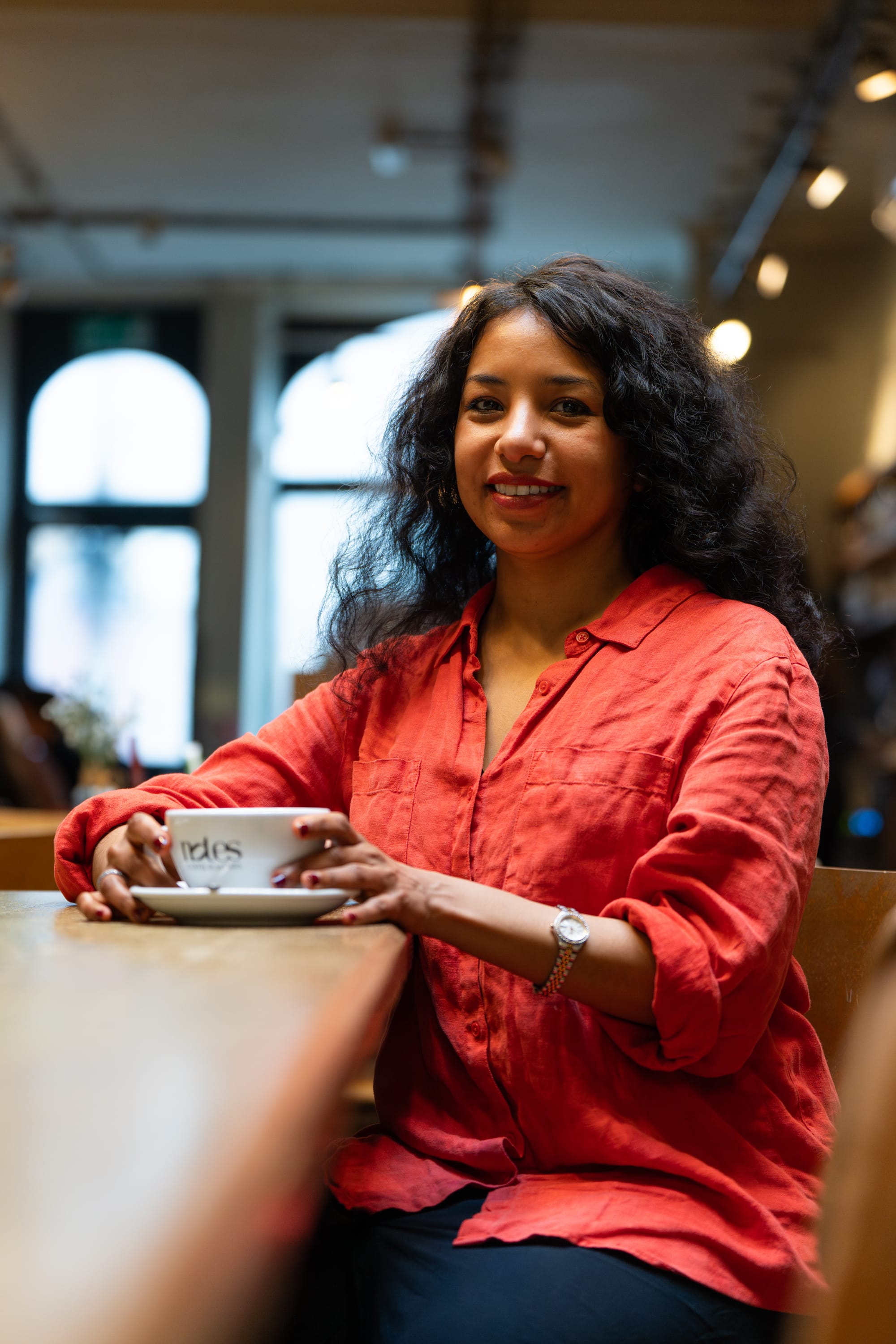
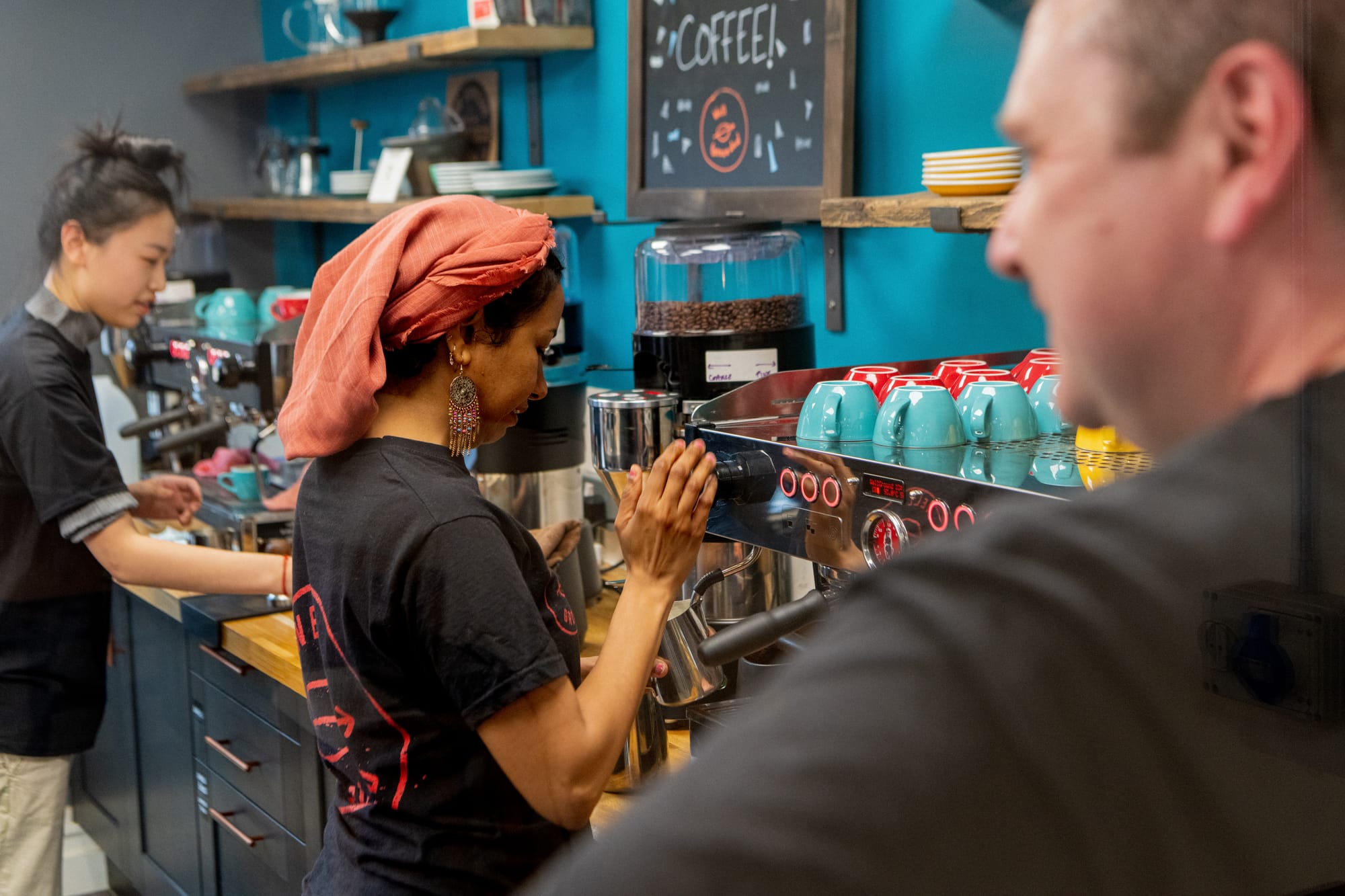
Well Grounded trainees (left) and Well Grounded Graduate & Board Member, Rasha Obaid (right) | Photos: Well Grounded
From displacement to Q Grader: a graduate’s journey
Rasha Obaid joined Well Grounded’s very first cohort in 2016, shortly after receiving asylum in the UK as a refugee. Starting as a barista at Notes Coffee in London, Obaid went on to work at Falcon and qualify as a Q Grader, completed a Master’s degree in Economics and Coffee Sciences in Italy, and published academic research on agricultural livelihoods and women – work she traces directly to the technical foundation she built at Well Grounded.
“I’d tell myself this is the start of a lifelong journey, not just a job,” she reflects. “Lean into every lesson; these skills will open doors.”
The sustainability dimension of her trajectory is striking. Her research sits at the intersection of supply chain ethics, gender and agricultural livelihoods – precisely the areas the coffee industry is grappling with as it confronts the environmental and social pressures facing producing communities.
She now serves as a board member at Well Grounded. “I went from navigating a new country during the war in my home country to being active within an industry and beyond,” she says. Rasha states that through Well Grounded she gained “professional confidence” and a sense of “belonging and agency” that unlocked a career spanning sourcing, research and, today, a practice as a sculptor and stone carver teaching art across London.
The next decade
Well Grounded’s 10,000 Lives campaign – an ambition to support 10,000 people across the UK into sustainable careers in coffee by 2035 – is, in one sense, a place-based vision of social impact. But it is also a sustainability argument. An industry that draws its talent from a wider, more diverse pool is a more resilient industry.
“The future of coffee will be shaped by people who combine deep technical knowledge with strong human skills,” says Eve. “Our role and our responsibility is to make sure those opportunities are accessible to everyone.”
Ten years in, the evidence suggests that when you invest in people with the same rigour and long-term thinking the industry brings to sourcing and roasting, remarkable things happen. Trainees become Q Graders, business owners, and a pilot programme in a Shoreditch basement becomes a national movement.
That, in the end, is what a sustainable coffee industry looks like.
For more information visit: wellgrounded.org